How cement is made
Cement is one of the world’s most essential building materials. From the foundations of homes and schools to highways, tunnels, ports and energy facilities, it holds the world together – literally. But while cement itself often takes centre stage in discussions about concrete and construction, the minerals that go into it are just as important in determining its performance, sustainability and environmental impact.
In this article, we explore how cement is made, why material selection matters, and how LKAB Minerals’ portfolio of industrial minerals – including GGBS and Calcined Clay – contributes to modern, responsible concrete solutions.
The cement manufacturing process
The journey from raw material to cement is a carefully controlled process that blends geology, chemistry and engineering.
1. Extraction and raw material preparation
Cement begins its life as raw materials such as limestone, clay and shale. These are typically extracted from quarries and stockpiled for processing. Limestone, a source of calcium carbonate, is the primary ingredient in most cement recipes. Other minerals contribute silica, alumina and iron – each playing a specific role in the chemistry of the final product.
At this stage, minerals undergo crushing and grinding to reduce particle size and create a consistent feed for the kiln.
2. Blending and homogenisation
Once crushed, the raw materials are blended to achieve a precise chemical composition. The mix must balance calcium oxide (from limestone) with silica, alumina and iron to produce a clinker phase that will form the heart of cement.
This blended material is then finely ground and dried, ensuring uniformity before entering the high-temperature stages of production.
3. Kiln heating: creating clinker
The blended raw mix moves through a rotary kiln, where it experiences gradually increasing temperatures up to around 1,450°C. In this extreme heat, chemical reactions occur:
- Calcium carbonate breaks down into calcium oxide and carbon dioxide
- Calcium oxide reacts with silica and other minerals to form clinker – small, nodular pellets that are the core of Portland cement
This stage defines cement’s fundamental properties and consumes the highest proportion of energy in the manufacturing process.
4. Cooling and final grinding
Once clinker emerges from the kiln, it is rapidly cooled and mixed with additional minerals to achieve the desired cement type. These may include gypsum – which controls setting time – along with supplementary materials that improve performance or lower the environmental impact of the final product.
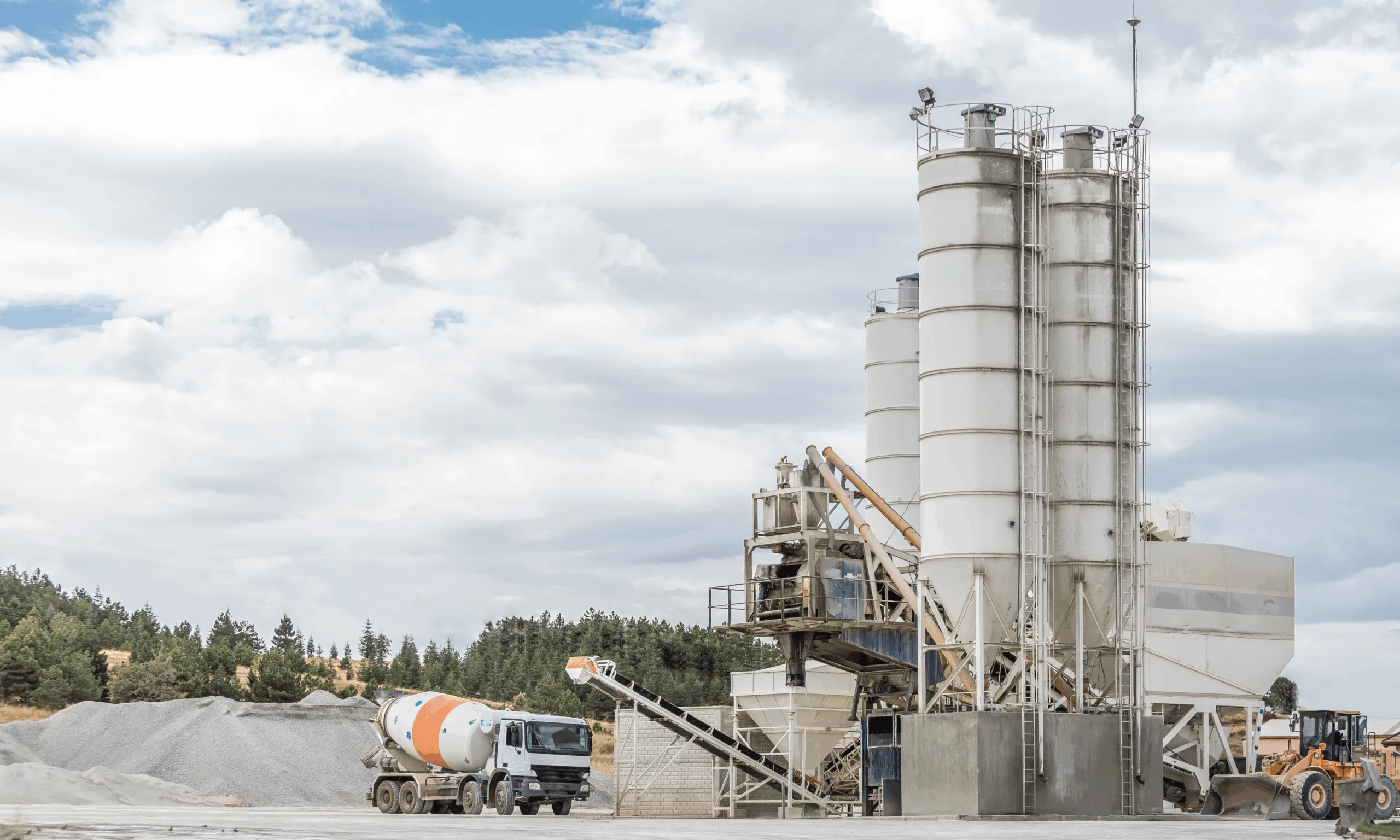
The clinker blend is finely ground into cement powder and stored in silos, ready for dispatch to concrete plants around the world.
Why supplementary minerals matter
Traditional cement production is energy-intensive and generates a significant portion of the concrete industry’s carbon emissions, primarily due to the kiln process. Today, the sector is evolving. More producers are using supplementary cementitious materials (SCMs) that partially replace clinker and enhance performance while reducing embodied carbon.
This is where minerals supplied by LKAB Minerals play a vital role.
GGBS as an environmentally responsible cement substitute
One of the most widely used supplementary materials is Ground Granulated Blast Furnace Slag (GGBS) – a by-product of iron production that has been processed for use in concrete.
GGBS offers multiple benefits:
- Reduced carbon footprint: Replacing a portion of clinker with GGBS can significantly lower the overall carbon intensity of cement and concrete.
- Improved durability: GGBS contributes to enhanced resistance against chloride penetration, sulphate attack and alkali–silica reactions.
- Enhanced workability and finish: Concrete containing GGBS often demonstrates smoother surface finishes and better workability, making it attractive for infrastructure and architectural applications.
By integrating GGBS into cement blends, producers can support long-lasting structures while advancing sustainability goals – a key priority for modern construction.
Calcined Clay for low-carbon concrete
Another mineral gaining traction in the quest for lower carbon concrete is Calcined Clay. When treated at high temperature, certain clays become reactive and can replace part of the clinker in cement. This innovation enables significant reductions in carbon emissions without compromising the performance characteristics that producers and specifiers demand.
LKAB Minerals’ Calcined Clay is designed specifically to:
- Lower the clinker factor in cement blends
- Boost long-term strength and durability
- Contribute to net-zero targets without costly process changes
For producers seeking practical, scalable routes to decarbonise concrete, calcined clay offers a compelling alternative – one that fits within existing production workflows and enhances material performance.
Minerals for enhanced concrete performance
Beyond GGBS and Calcined Clay, other LKAB Minerals products contribute to responsible concrete production, including:
- Limestone filler: Improves workability, reduces cement content and enhances surface finish.
- High-density minerals: Used in specialised concrete applications where weight or radiation shielding is needed.
- Fillers and performance enhancers: Tailored solutions for specific mix designs.
Each material brings a defined value to concrete production – whether through improved performance, enhanced durability or reduced environmental impact.
Understanding how cement is made is valuable not only for industrial audiences but also for anyone involved in construction, infrastructure or building design. Cement provides the foundation for concrete, yet it is the supplementary minerals and thoughtful mix design that enable modern concrete to meet performance, durability and sustainability goals.
As the industry evolves, materials like GGBS and Calcined Clay will play an increasingly important role in shaping more resilient, lower carbon structures.
By partnering with reputable suppliers such as LKAB Minerals, producers can access high-quality minerals backed by expertise, traceability and a commitment to responsible sourcing – from quarry to concrete plant and beyond.
Whether you’re producing standard structural concrete or pushing the boundaries of low-carbon design, the right minerals make all the difference. You can find out more about our cement and binder solutions here. You can also follow LKAB Minerals on LinkedIn for the latest product updates, case studies, and industry insights.