Why sulphur is key for nutrient efficiency
Sulphur is one of the essential building blocks of plant life. Every crop and every blade of grass depends on it. Yet for many years it has been treated as the “forgotten nutrient” in UK agriculture. That situation is changing fast. Modern farming practices, higher yields and cleaner air have combined to create a genuine sulphur shortfall in soils across the country. Recognising and correcting this gap early in the season is now a critical part of successful nutrient management.
Why sulphur matters to crops
Sulphur supports several key processes within plants. It plays a direct role in protein synthesis, chlorophyll formation and enzyme activity. Without enough sulphur, plants struggle to metabolise nitrogen effectively, meaning that even well-planned fertiliser programs may not deliver their full potential. The result can be weaker crops, reduced quality and lower yields.
Different crops show the effects in different ways. In wheat, sulphur is vital for the production of high-quality proteins that influence loaf volume and baking performance. In brassica crops such as oilseed rape, it is involved in glucosinolate compounds that give the plants their characteristic flavour and help ensure even, timely maturity. For grassland farmers, sulphur contributes to improved forage protein levels and stronger early spring growth, helping livestock make better use of grazing and silage.
When sulphur is in short supply, important quality traits suffer – oil content in seed crops, starch levels in tubers, and the overall protein value of forage. In short, sulphur deficiency quietly undermines profitability.
The changing face of UK sulphur supply
Historically, UK farmland received a steady background supply of sulphur from the atmosphere. Emissions from coal burning and heavy industry created deposition levels that were often enough to meet crop demand. Over recent decades, environmental regulations and the decline of coal use have dramatically reduced those emissions. Flue-gas desulphurisation has cleaned up power generation, bringing huge benefits for air quality – but leaving soils far poorer in sulphur as a consequence.
Today, national soil test data shows that the majority of UK soils are potentially sulphur deficient. Higher-yielding varieties remove more nutrients than ever before, increasing demand just as natural supply has fallen away. What was once a nutrient farmers could take for granted must now be actively planned for.
Spotting sulphur deficiency
Sulphur deficiency can be difficult to recognise. Symptoms often appear in the younger leaves first, causing a pale-yellow or washed-out appearance known as chlorosis. In cereals and grass, this can look similar to nitrogen deficiency, which means the problem is easily misdiagnosed. Nitrogen shortages tend to show up in older foliage, while sulphur problems affect new growth.
In oilseed rape, visual clues are sometimes clearer. Flowers may develop very pale-yellow or almost white petals, and plants can appear stunted compared with healthy areas of the field. Because these signs can be subtle, routine observation alone is not always reliable. Regular testing and informed agronomy advice are the safest ways to identify risk.
Not all soils behave the same
Sulphur in the soil acts in a comparable way to nitrogen. Heavier clay soils and those rich in organic matter are better able to retain and supply sulphur through natural microbial processes. Light, free-draining mineral soils, particularly in higher rainfall regions, are far more vulnerable to sulphate leaching. These fields are most likely to benefit from targeted sulphur inputs.
Organic sulphur compounds must be broken down by soil microbes before plants can take them up as sulphate. That conversion requires time, warmth and moisture, which means availability varies through the year. The traditional four-year soil testing cycle used for pH, phosphorus and potassium is not well suited to sulphur. Conditions change too quickly. For the clearest picture, annual sulphur testing is increasingly important.

Choosing the right sulphur source
There are several ways to add sulphur to soils, but they do not all work in the same timeframe.
Farmyard manure contains useful amounts of sulphur, yet most of it is slow-release. To be effective, it needs to be applied in the autumn so that mineralisation can occur before spring. Slurries can supply sulphur more rapidly, but late-autumn applications risk losses over winter. Elemental sulphur fertilisers also require microbial conversion to sulphate and must be used well in advance, bringing similar leaching considerations.
For farmers looking for a dependable spring solution, fertilisers that already contain sulphur in sulphate form are often the most practical option. Products such as gypsum (calcium sulphate) can deliver plant-available sulphur, but reactivity is closely linked to particle size. Coarsely ground materials dissolve slowly. Granulated formats produced from ultra-fine particles provide far faster action.
Fast-acting nutrition with Calcifert LS11
Modern agriculture needs modern tools. Calcifert LS11 has been developed with exactly that principle in mind.
Granulated from very fine material, Calcifert LS11 delivers nutrients that are immediately available to crops. It contains 11% SO₃ alongside a high proportion of reactive calcium carbonate. That combination enables farmers to address sulphur deficiency while also supporting balanced soil pH – a factor that is fundamental for overall nutrient use efficiency.
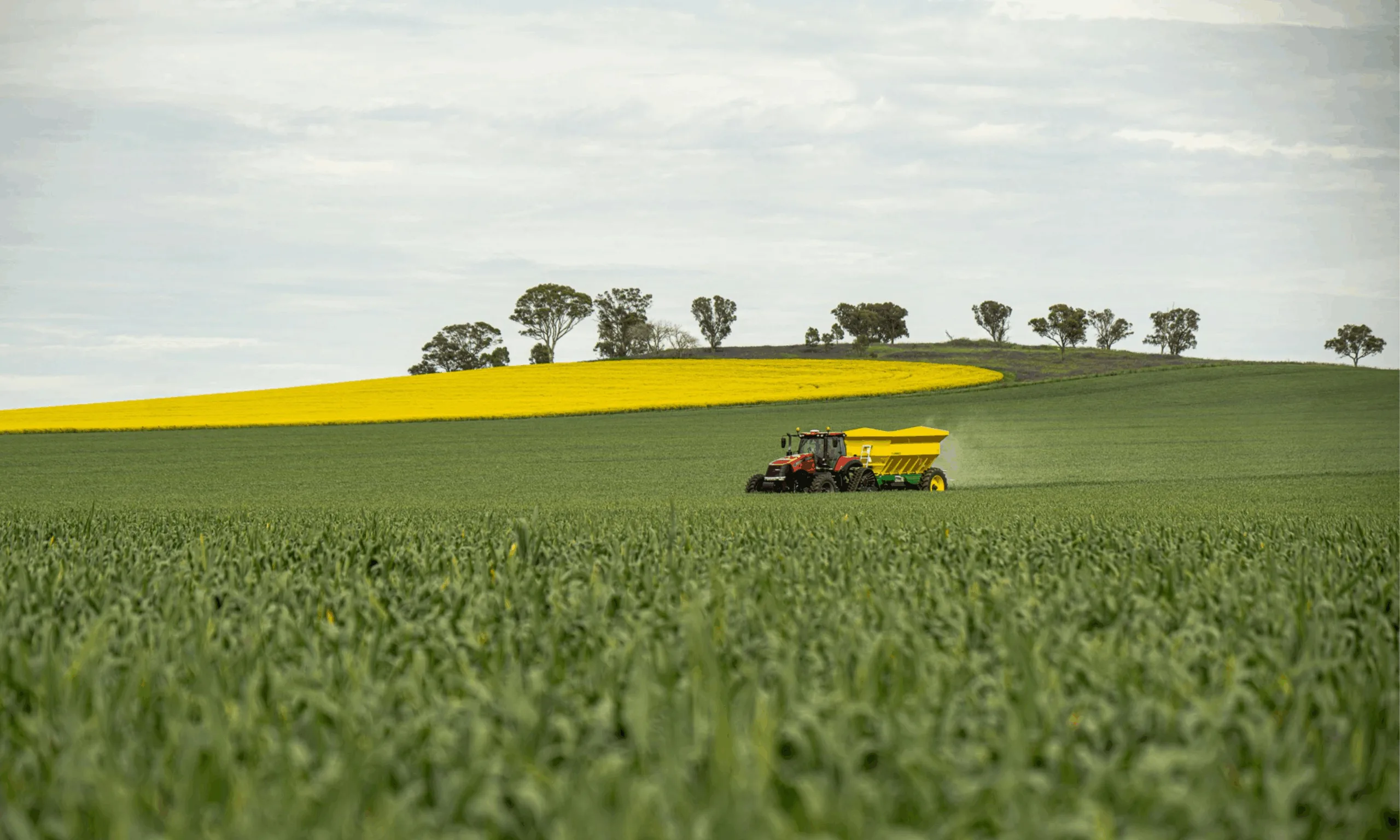
The convenient granule format means the product can be spread accurately using standard farm equipment. It fits easily into early spring fertiliser dressings for oilseed rape, cereals and multi-cut grass silage. Applications can be timed ahead of drilling, with the first nitrogen dressing, or later at stem extension when crop sulphur demand increases.
By splitting sulphur supply through the season, farmers reduce the risk of leaching losses associated with single heavy applications. Crops gain access to sulphur and calcium precisely when they need them most for protein synthesis and vigorous growth.

Benefits beyond the bag
Sulphur is only part of the picture. Calcium from Calcifert LS11 contributes to improved soil structure and aggregation, helping roots penetrate more effectively and soils drain better during wet spring periods. Addressing calcium, sulphur and pH together creates healthier, more resilient fields that respond better to all other fertilisers applied.
Maintaining a near-neutral pH is especially important. Just as with nitrogen, soils that are too acidic limit sulphur uptake. Liming with highly reactive calcium carbonate helps ensure that expensive fertiliser inputs become fully bio-available rather than wasted.
Practical support for farmers
At LKAB Minerals, we understand that nutrient management is a year-round challenge. Supplying quality products is only one part of our role. Our agricultural technical team works closely with distributors, agronomists and end-users to interpret soil tests, plan application strategies and ensure materials are used effectively on farm.
Closing the sulphur gap early in the season can deliver real improvements in crop performance, forage quality and farm income. With clear planning and reliable mineral fertilisers, UK farmers can give their crops the strongest possible start to spring – and build momentum right through to harvest.
Calcifert LS11 is suitable for any cropping situation where soils require both neutralisation and a sulphur supply. By combining practical products with knowledgeable advice, LKAB Minerals continues to support profitable and sustainable agriculture across the UK. To learn more about our Calcifert products and how they can enhance your applications, visit our Calcifert product page or contact our team of experts. You can also follow LKAB Minerals on LinkedIn for the latest product updates, case studies, and industry insights.