Using Talc in ceramics for lower firing temperatures and improved energy savings
Energy efficiency is a key focus for modern ceramics production. Kiln firing accounts for a significant portion of energy use, so finding ways to lower firing temperatures without compromising product quality can deliver substantial savings. Incorporating Talc in ceramics has been valued for its fluxing properties, helping manufacturers reduce energy consumption and improve material performance.
What is Talc and why it matters in ceramics
Talc is a naturally occurring magnesium silicate with a platy morphology, chemical inertness, and high thermal stability. In ceramic applications, Talc functions as a flux, promoting partial melting during firing, which facilitates densification, sintering, and surface smoothness.
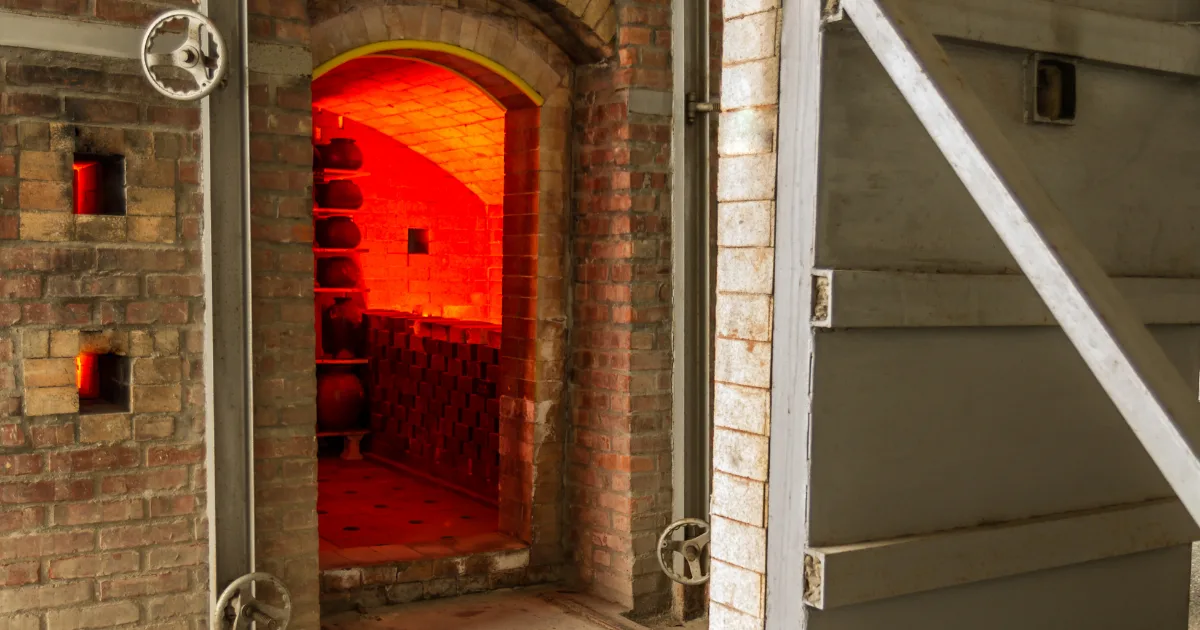
By incorporating Talc into clay, porcelain, or tile formulations, manufacturers can:
- Reduce the temperature required for firing
- Enhance mechanical strength and toughness
- Improve surface finish and gloss
- Support uniform shrinkage and dimensional stability
These properties allow for energy savings, improved throughput, and higher-quality finished products.
Talc S20 for controlled fluxing
Talc S20, offered by LKAB Minerals, is a fine, consistent Talc with excellent particle size distribution. Its small, platy particles:
- React efficiently during firing to lower the onset of vitrification
- Help maintain uniformity across large ceramic tiles or complex shapes
- Improve the densification process, reducing defects such as warping or cracking
By optimising the quantity and particle size of Talc, ceramic producers can reduce firing temperatures by up to 20 to 30°C, resulting in lower energy consumption and reduced kiln operating costs.
Additional benefits of Talc in ceramics
Beyond energy savings, Talc improves:
- Surface smoothness : The platy morphology fills gaps between clay particles, creating a more uniform glaze surface.
- Mechanical performance : Strength and resistance to chipping improve due to improved particle packing and densification.
- Consistency : LKAB Minerals’ processed Talc ensures reliable chemical composition and particle size, supporting predictable performance in large-scale production.
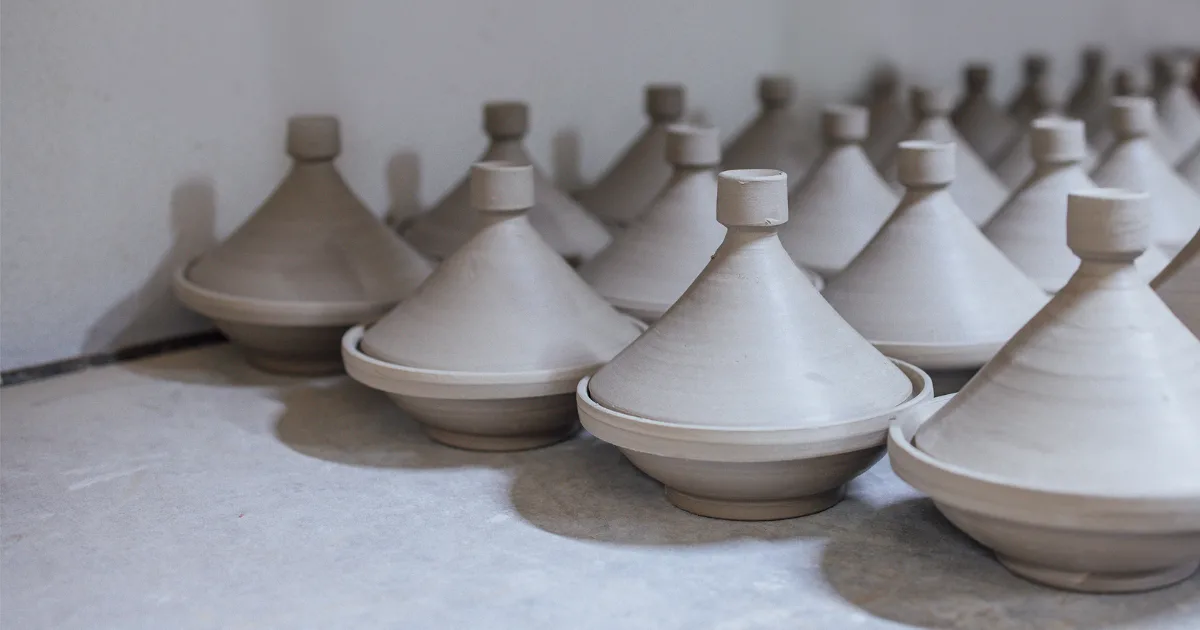
Combining Talc with other minerals
In many formulations, Talc works alongside other fluxing agents or fillers such as feldspar, silica, or calcium carbonate. The combination allows fine-tuning of thermal expansion, shrinkage, and final mechanical properties, while maximising energy efficiency.
For producers looking to innovate, controlled Talc addition offers both technical and economic benefits, from lower fuel costs to higher product quality and consistency.
The LKAB Minerals advantage
LKAB Minerals supplies high-purity talc with controlled particle size and consistent performance across every batch. Technical support is available to help ceramics manufacturers optimise firing schedules, improve energy efficiency, and achieve high-quality finished products.
Using Talc as a flux is a simple, proven approach to reduce energy use in kilns while maintaining excellent mechanical and aesthetic properties. For more details on our Talc products, visit LKAB Minerals talc page. You can also follow LKAB Minerals on LinkedIn for the latest updates, case studies, and industry guidance.