Future homes standard: Optimising underfloor heating performance with Anhydrite screed
Flowing anhydrite screed plays an important role in maximising the performance of underfloor heating Systems. Among the many advantages of underfloor heating are improved comfort, even heat distribution and compatibility with low-carbon heating systems. The use of flowing anhydrite screed helps support efficient heat transfer throughout the floor construction.
The contract flooring association (CFA) has welcomed a significant milestone for the industry. They have secured recognition for underfloor heating within Future Homes and Building Standards discussions. It’s a positive development that reflects the growing role of energy-efficient heating systems in modern construction.
As the sector continues to focus on reducing energy consumption and improving the performance of new homes, Underfloor Heating is expected to play an increasingly important role. This is expected to happen alongside low-carbon heating technologies such as heat pumps.
Supporting energy efficient heating systems
Much of the discussion surrounding the future homes standard has focused on heat pumps and low-carbon heating technologies. While the systems will play a key role in meeting future energy efficient targets, the overall performance of a heating system depends on more than just the heat source itself.
Every component within the floor build-up contributes to how effectively heat is transferred throughout a building. This includes insulation, pipe spacing and screed selection. As developers consider the installation and running costs of heat pumps, attention is increasingly turning to the wider heating system. Additionally, focus is on how every component can contribute to overall efficiency.
The CFA’s recently published guidance document highlights this point. It dedicates a section to floor screeds and their impact on Underfloor Heating performance.
The advantages of anhydrite screed
Within the guidance, anhydrite screed is recognised for several characteristics that make it particularly well suited to underfloor heating systems.
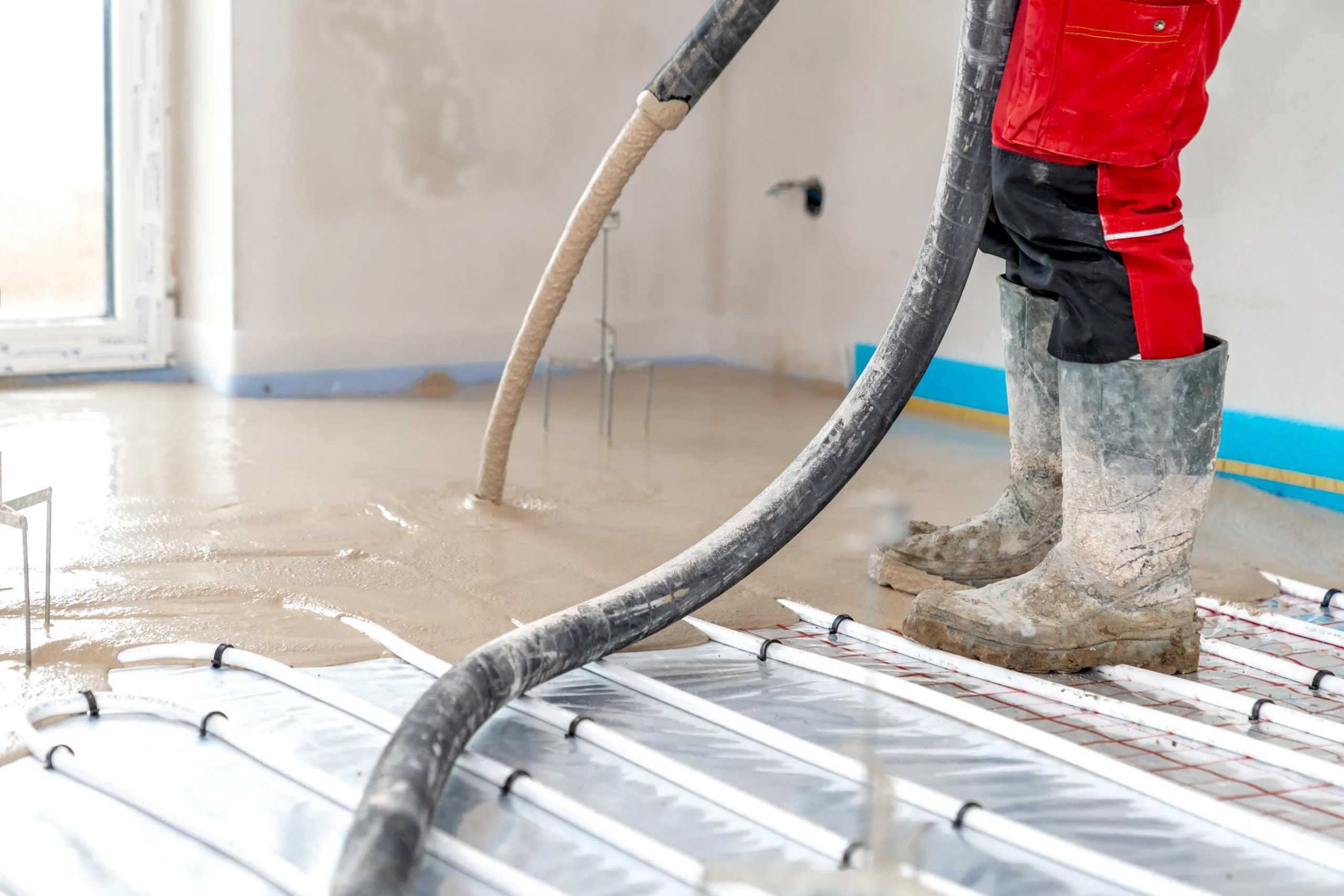
Unlike traditional sand and cement screeds, flowing anhydrite screeds fully encapsulate heating pipes. This minimizes air voids and ensures efficient heat transfer throughout the floor. This allows heat to move more effectively from the pipe network into the occupied space above.
The result can be improved thermal performance, faster response times and greater efficiency from the heating system.
The guidance also highlights the ability of flowing screeds to be installed across large areas with fewer joints. This can simplify installation while helping to achieve a more consistent floor finish.
Why screed selection matters
As the construction industry works towards the requirements of the future homes standard, attention is increasingly turning to the performance of entire building systems rather than individual products.
For developers, contractors and specifiers, this means considering how each element of a floor construction can contribute to energy efficiency and occupant comfort.
The relationship between underfloor heating and screed is a good example. A high-performing heating system can only deliver its full potential when paired with materials that support effective heat distribution.
Selecting the right screed can help maximise thermal efficiency, improve system responsiveness and support the long-term performance of the building.
How Gypsol screeds enhance underfloor heating performance
The characteristics highlighted within the CFA guidance are reflected in products such as Gypsol screeds. These products are widely used in residential and commercial projects where underfloor heating performance is a key consideration.
As a self levelling floor screed, Gypsol provides excellent flow characteristics and complete pipe encapsulation. This makes it an ideal partner for wet underfloor heating systems. The result is efficient heat transfer and a floor construction designed to support modern heating technologies.
With a range of products available to suit different project requirements, Gypsol screeds continue to be specified where performance, efficiency and installation quality are key considerations.
Building for the future
The future homes standard represents an important step towards delivering lower-carbon, energy- efficient buildings.
With increasing focus on sustainability and the circular economy in construction, designers are placing greater emphasis on materials and systems. These options support long-term building performance and reduced energy consumption.
While much attention will remain on heating technologies such as heat pumps, it is encouraging to see industry guidance recognise the contribution that floor construction can make to overall system performance.
The CFA’s guidance reinforces what many in the industry already understand: achieving efficient underfloor heating requires a joined-up approach, where every element of the system works together.
As standards continue to evolve, selecting the right screed will remain an important consideration in creating comfortable, energy efficient homes for the future.
To learn more about LKAB Mineral’s range of Gypsol screeds, please click here. You can also follow LKAB Minerals on LinkedIn for the latest industry insights and application developments.