How floor screed supports Part L building regulations heating performance
The Future Homes Standard (FHS) is changing how homes are designed and built. From 2027, new buildings will need to be zero-carbon ready, with higher fabric standards and low-carbon heating systems at their core. The direction is clear: better insulation, lower energy use, and heating systems that work at lower temperatures. These changes align closely with Part L building regulations heating requirements, which focus on improving thermal performance and reducing carbon emissions across new homes.
When we talk about Part L of the Future Homes Standard, the focus usually goes towards insulation, windows and heating systems. But there’s a key layer in every building that quietly influences all three, and it’s often overlooked: the floor screed.
Homes in the UK can lose up to 20% of heat through the floor. That highlights a clear opportunity to better manage thermal efficiency and carbon usage in new build projects. Traditionally, screed has been seen as a finishing layer, a way to create a level surface for the final floor finish.
But it doesn’t have to be just that. It can play a direct role in thermal efficiency, carbon reduction and overall comfort.
Supporting the full floor build up
Thermal performance doesn’t come from one element; it comes from how the whole floor is designed and installed.
- Insulation limits heat loss
- Heating systems generate and circulate heat, such as underfloor heating (UFH)
- Screed transfers that heat into the space
To meet Part L requirements, these elements need to work together. The screed sits at the centre of that relationship, directly affecting how efficiently heat is delivered into the building.
Thickness of screed
To support Part L’s thermal efficiency goals, screed thickness needs to be carefully considered.
Pairing UFH with a zero laitance liquid flowing screed, such as Gypsol HTC ZL, allows for a more controlled and efficient floor build-up.
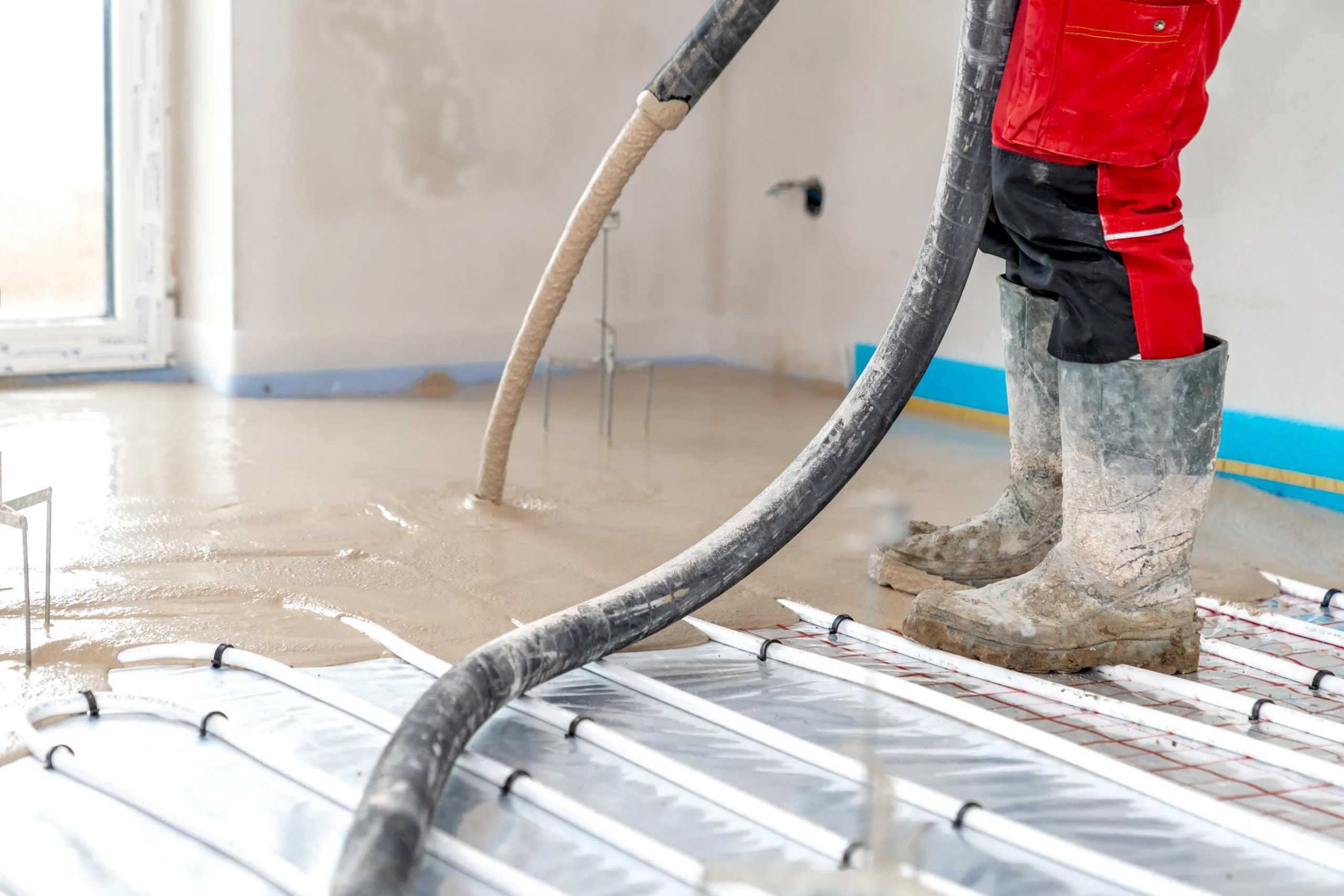
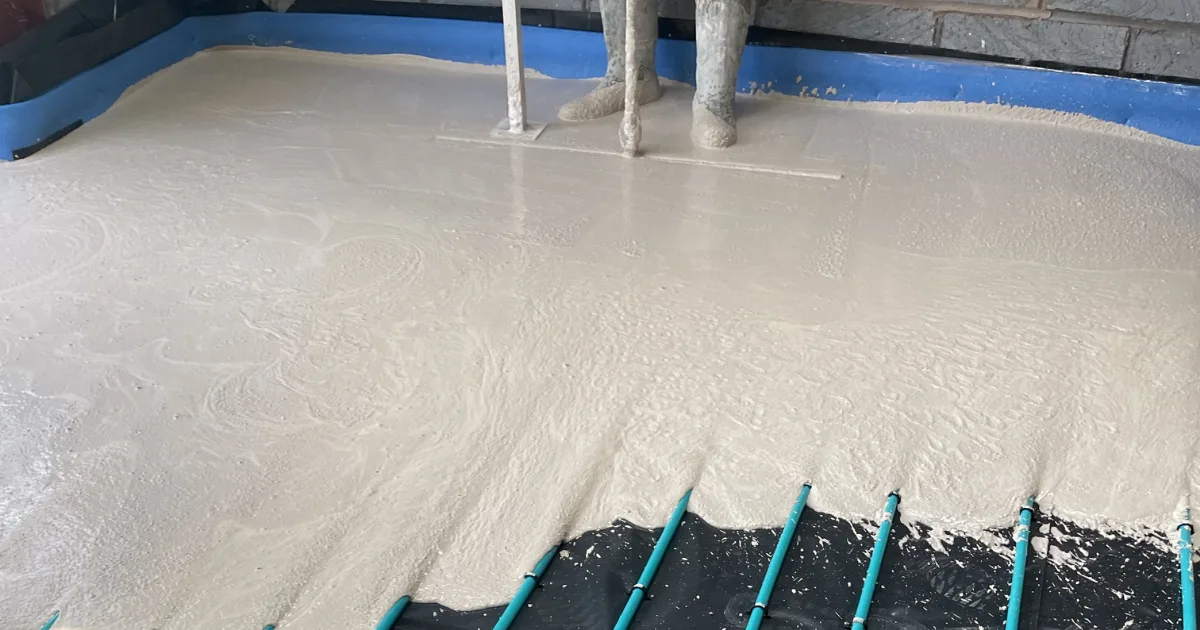
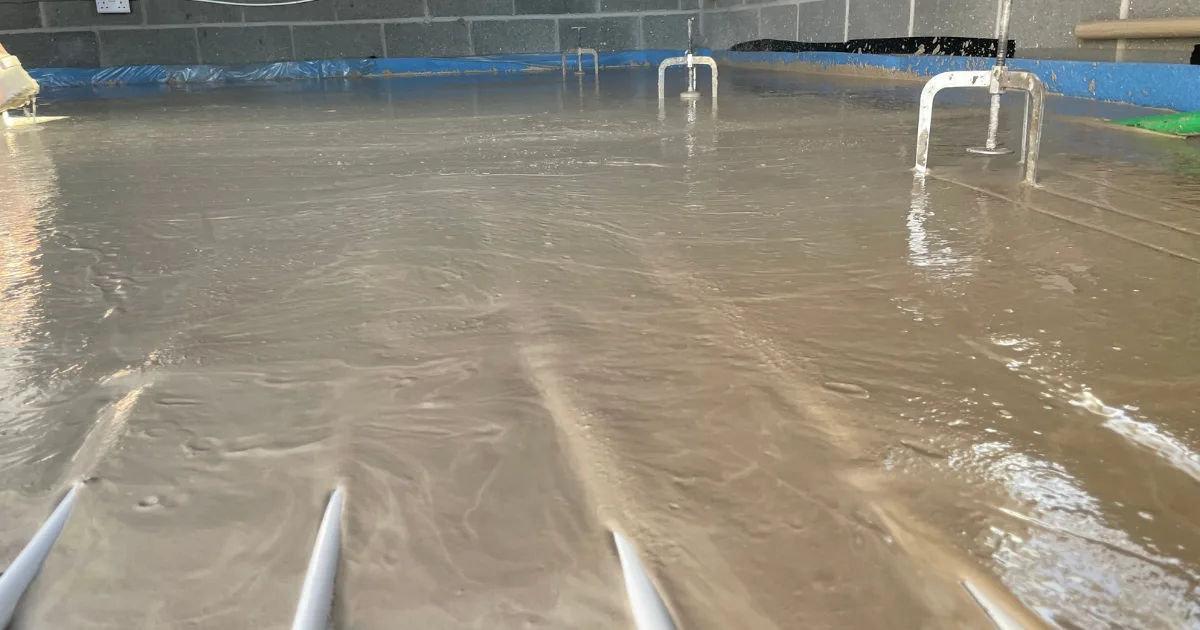
The liquid nature of the screed enables full encapsulation of UFH pipes, reducing air pockets and increasing contact between the pipe and the screed. This improves heat transfer and allows the screed to act effectively as a thermal mass, absorbing heat and releasing it evenly into the space.
Thicker screeds take longer to absorb and release heat.
That’s why anhydrite-based screeds are typically installed at 40 – 50mm, compared to 75 – 80mm for traditional sand and cement. The result is a faster response time and more efficient system performance.
Thermal conductivity and efficiency
Part L encourages the use of low-temperature heating systems to reduce energy demand.
Anhydrite flowing screeds support this by offering significantly higher thermal conductivity than traditional sand and cement options, often reported at up to twice as efficient.
Their flowing properties remove voids and ensure consistent contact with UFH pipes, improving heat transfer across the entire floor.
This allows systems to operate effectively at lower temperatures, typically around 30 – 45°C, making them well suited to heat pumps and other low-carbon heating solutions.
Studies suggest that combining UFH with a high-performance anhydrite screed can reduce energy use by up to 25% in new homes.
Project speed and programme
Programme planning is becoming more important as regulations evolve.
The Future Homes Standard will introduce new systems and materials, and without the right planning, this can lead to delays or performance issues on site.
Common risks include:
- Excessive screed thickness
- Premature commissioning of UFH
- Lack of a closed building envelope
- No moisture testing before final floor finishes
However, when specified and installed correctly, anhydrite-based screeds can support faster project delivery.
- Foot traffic is typically possible within 24 – 48 hours
- Initial curing can be achieved in under 7 days
- Zero laitance options remove the need for mechanical sanding
This not only improves programme efficiency but can also reduce labour requirements and associated costs by up to 66%.
Which screed should you choose?
With Part L raising performance expectations, screed selection should be based on how the floor will perform, not just how it will be installed.
For projects using UFH and low-carbon heating systems, key considerations should include:
- Thermal conductivity
- Compatibility with lower flow temperatures
- Ability to achieve consistent installation
- Programme requirements and drying times
Flowing anhydrite screeds, such as Gypsol, are designed with these factors in mind, supporting both compliance and real-world performance.
As the Future Homes Standard continues to come into force, the role of screed is changing.
It’s no longer just a surface to build on its part of how a building performs.
Getting the floor build-up right will be critical to meeting Part L targets, reducing energy use, and delivering homes that are comfortable and efficient to run.
Want to understand how Gypsol can support your next project?
Speak to our team or book a CPD to learn more about installation, performance and carbon savings. You can also follow LKAB Minerals on LinkedIn for the latest product updates, case studies, and industry insights.