What are industrial minerals? Definition, uses and applications
Industrial minerals are naturally occurring, non‑metallic minerals used in construction, manufacturing, infrastructure and environmental applications for their physical and chemical properties rather than for metal extraction.
They are essential to modern life, even though they are rarely visible in the finished product.
What makes a mineral an “industrial mineral”?
Industrial minerals are defined by performance, not scarcity. Unlike metallic minerals, they are not processed to extract metal content. Instead, they are used for characteristics such as:
- Particle size and grading
- Purity and chemical composition
- Hardness and abrasion resistance
- Reactivity, thermal behaviour or acoustic properties
At LKAB Minerals, our products are engineered to deliver precise, repeatable performance, ensuring they function reliably in demanding environments.
Industrial minerals vs metallic minerals: What’s the difference?
| Industrial minerals | Metallic minerals |
|---|---|
| Used for functional properties | Used for metal extraction |
| Non‑metallic | Metallic content recovered |
| Used “as is” or physically processed | Chemically refined |
| Examples: Limestone, Olivine, gypsum | Examples: iron ore, copper |
This distinction matters because industrial minerals often remain chemically unchanged – their natural structure is the product.
Examples of industrial minerals
Common minerals include:
Each mineral can serve multiple industries depending on how it is processed.
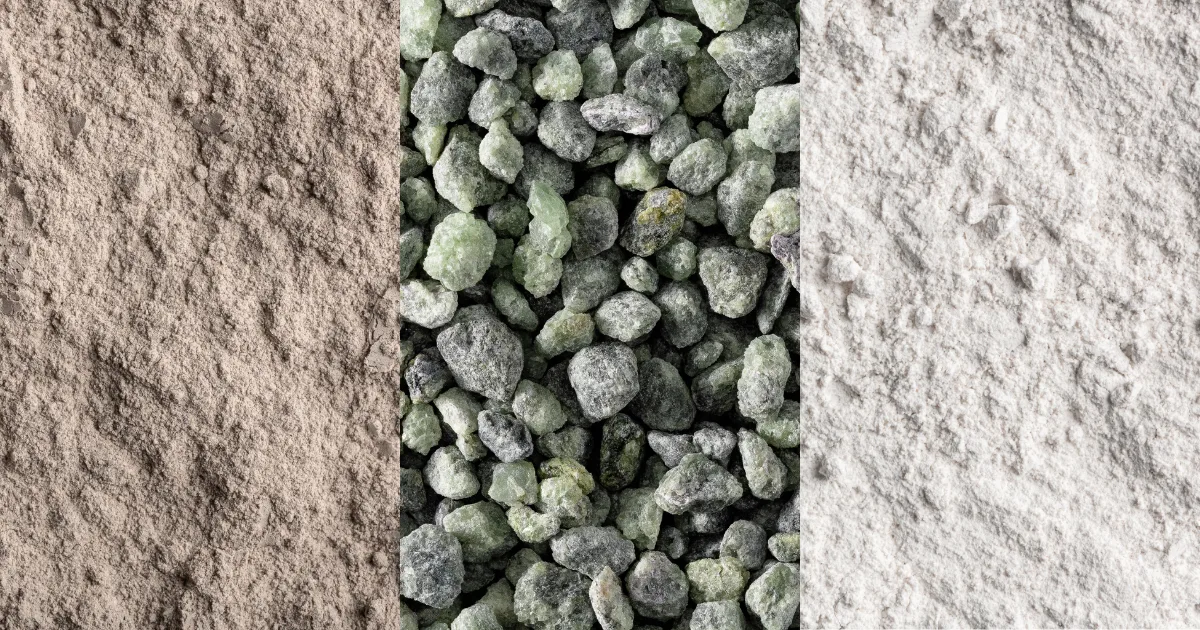
- Limestone is often used in asphalt fillers, screeds, environmental applications
- Olivine can be integrated in foundry sand, steelmaking, high‑friction surfacing processes
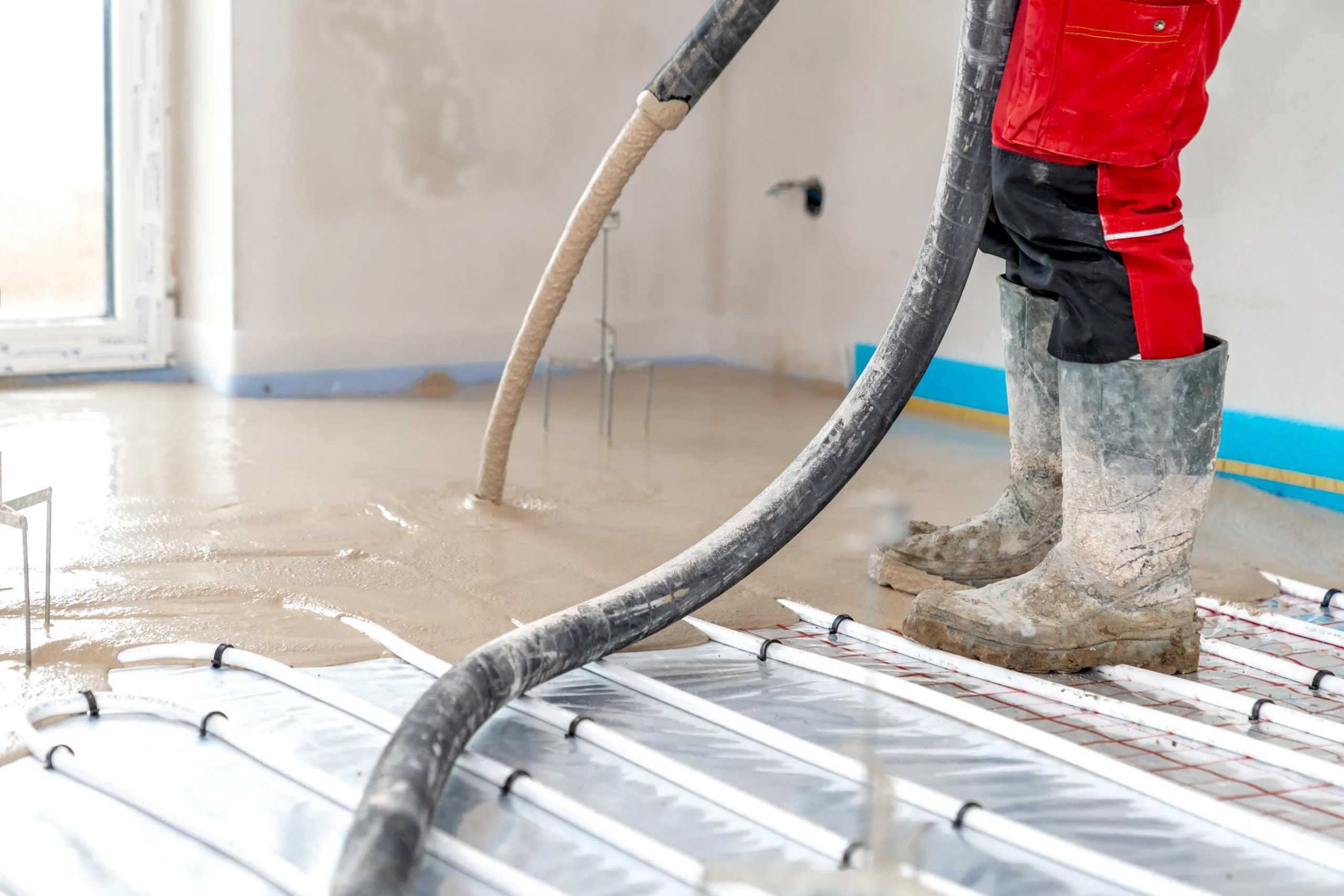
- Gypsum is used within high‑performance screeds such as Gypsol
To explore our full industrial mineral product portfolio, you can click here.
Where are industrial minerals used?
Construction and infrastructure
Minerals underpin modern construction by improving:
- Strength and durability
- Safety (e.g. skid resistance)
- Workability and finish quality
Applications include:
- Asphalt and road surfacing
- Flooring and screeds
- Concrete and aggregates
Manufacturing and heavy industry
- Foundries and refractories
- Steelmaking and slag conditioning
- Glass and ceramics
Environmental & energy applications
- Water and wastewater treatment
- Filtration and absorption
- Circular and climate‑efficient processes
- Heat storage
How LKAB Minerals adds value beyond extraction
Industrial minerals are rarely used “as mined”. LKAB Minerals adds value through:
- Responsible sourcing
- Controlled processing
- Quality assurance and testing
- Application‑specific engineering
This ensures predictable performance at scale, reducing customer risk and whole‑life costs.
Sustainability and minerals
Industrial minerals are finite resources. Sustainability therefore depends on:
- Efficient processing
- Long product life
- Reduced re‑work and waste
By supplying materials that perform correctly first time, we support more responsible industrial systems.
Frequently asked questions
Are industrial minerals renewable?
No. They are finite resources, which is why responsible sourcing and efficient use are essential.
Why are industrial minerals important?
They enable safe infrastructure, efficient manufacturing and modern environmental systems.
Discover how LKAB Minerals supplies minerals for critical applications worldwide by exploring our website. You can also follow us on LinkedIn for the latest insights, case studies and industry updates.